
How many lights can i have on in my house at once
Most houses in the UK have 2 light circuits in the Fuse Box or Consumer Unit.
These light circuits typically have a 6 amp circuit breaker for upstairs and a 6 amp circuit breaker for downstairs meaning a total possible allowance of 12 amps for lighting.
Modern LED bulbs are typically around 4 watts each or approximately 0.017 amps.
This means that on each 6 amp circuit you could have around 345 light bulbs (lamps if you're an electrician) on each circuit or 690 for the house in total.
Back to top
1) What number of lights can I have if they are 5 watt bulbs?
Using the same separate 6 amp circuit for upstairs and downstairs as before:
A 5 watt LED light bulbs is approximately 0.022 amps meaning a 6 amp circuit could safely take around 276 light bulbs. Meaning 552 bulbs for the house.
Back to top
2) How many pendant lights can I have in my house?
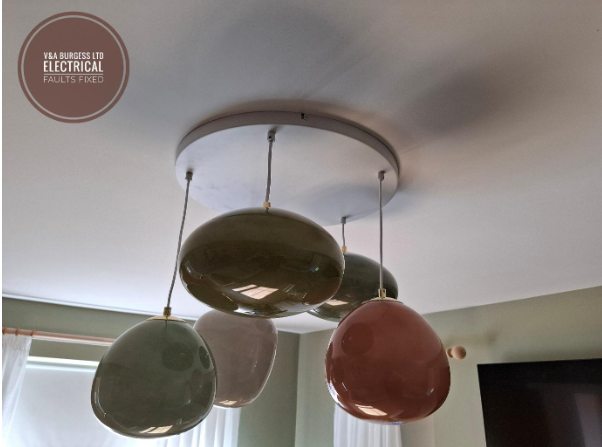
Assuming we are using 7 watt bulbs in each pendant then each would require 0.03 amps to operate. This would mean you could have a theoretical 197 pendants on each light circuit of the house. Best not to ask your electrician to do this for you, they won't be very happy and it WILL be expensive.
Back to top
3) How many recessed lights can I have in my house?
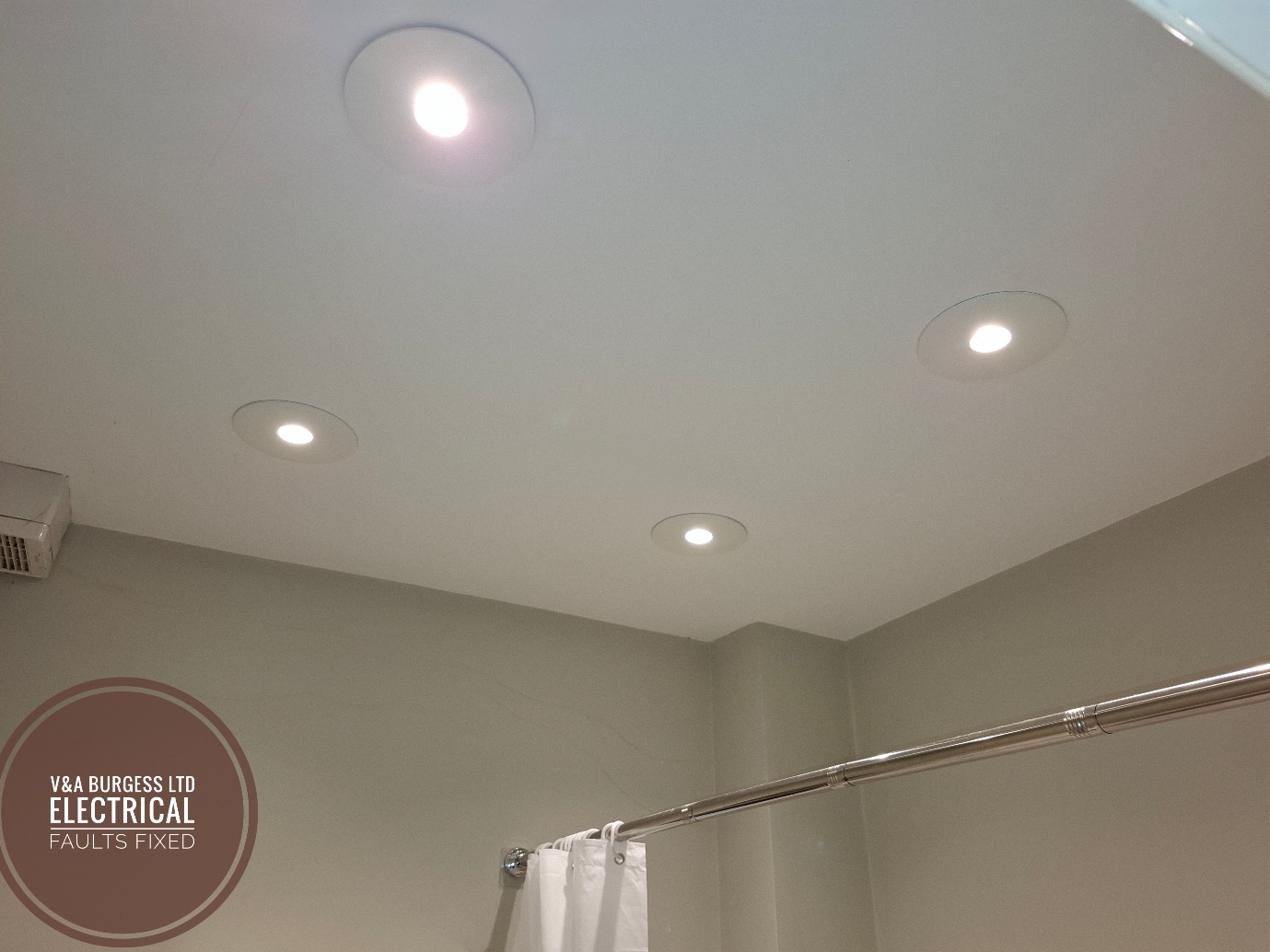
Modern spotlights, downlights or recessed lights are typically a maximum of 10 watts each and even at this level of power they are likely too bright for general lighting in a domestic home. If you were to have 4 or more of these in a typical living room or dining room it would likely exceed the required light levels for the space and be uncomfortable to sit in that room for very long.
Nevertheless, at a maximum of 10 watts on a 6 amp circuit we would require 0.043 amps per downlight and be able to have a total of 207 downlights on each 6 amp circuit.
Back to top
4) What about table lamps, floor lamps and ceiling lights?
Ok, so if you were serious about wanting to burn your retinas out of your eyes, we could look at the maximum allowable power in our homes and work out the total amount of lights from that.
Many of our homes have an incoming mains supply fuse (normally found inside your meter box) that is rated at 100 amps. The typical LED light bulb is around 4 watts. This means we could have a theoretical maximum of 5750 light bulbs in our homes without putting the main fuse at risk of blowing!! That is a lot of Christmas lights and neighbours complaining.
Back to top
5) Led Lights vs Incandescent Light Bulb
Led lighting is currently the most efficient lighting that we have available providing great light intensity without using lots of electricity. Incandescent lighting (old filament bulbs that get hot) is not the best for energy efficiency! If you were to use an old incandescent bulb in each fitting you would be able to use fewer of these on your 6 amp lighting circuit. Assuming 60 watt incandescent bulbs were to be used. this would require 0.26 amps per bulb meaning only 23 bulbs per 6 amp circuit or 46 total across the upstairs and downstairs lighting.
Back to top
6) LED lights and In-Rush Currents
There is one issue with having so many LED lights installed on an electrical circuit if considering switching large amounts of lights at the same time. This issue is known as In-Rush current. This is where the bulbs demand more than their rated electrical load for a fraction of a second on start-up causing an In-Rush of demand. When switching large banks at the same time this can cause a circuit breaker to trip off at the consumer unit or fuse box.
Back to top
7) Summary
In modern homes using modern lighting technology far more lights are able to be installed when compared to older homes with filament bulb technology. In reality when we consider the amount of LED bulbs that we are able to install in light fittings, it is highly unlikely that a lighting circuit would ever be overpowered. It is possible to have literally hundreds of LED lights on a circuit without causing an issue with prolonged overload. In rush currents need to be considered when switching large amounts of LED fittings at the same time.
Back to top
- Inicie sesión para enviar comentarios