
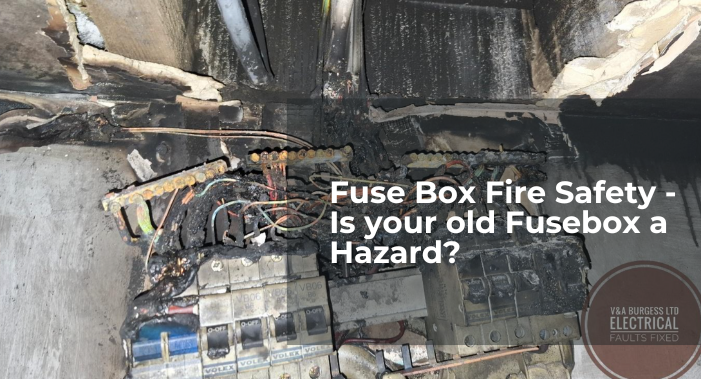
If you still have an old-fashioned fuse box in your home it is time to replace this for a modern consumer unit with circuit breakers, RCD's or ideally RCBOs.
Índice
- Regular Inspections of Old Fuse boxes
- Risk of Fire in the Fusebox
- Outdated Consumer Units
- Danger Signs for your Fuse Box
- Fuses and Fuse Wire Fuse Boxes
- Plastic Consumer Units
- Overheating
- Browning / Colour Changing
- Damaged or Missing Cover
- New Regulations
- Emergency Electricians
- Legal Requirement
- Residual Current Devices in your Fuse Box
- USA Breaker Panels
- Circuit Overloads
- Older Homes and Electrical Circuits
- Conclusion
Old fuse wire or cylinder fuse boxes can present a significant fire hazard due to their age and likely lack of maintenance. These styles of fuse box have not been installed for at least 40 years (at the time of writing) meaning they are likely to be protecting outdated electrical systems as well.
Back to top1) Regular Inspections of Old Fuse boxes
In order to limit the risk of electrical fire, short circuits, or electric shock, it is critical that electrical installations are inspected and tested regularly to check for any hidden dangers. The fuse box should be checked along with the electrical circuits to ensure that wiring is in good condition and the fuse box will disconnect the circuit effectively when there is an electrical fault.
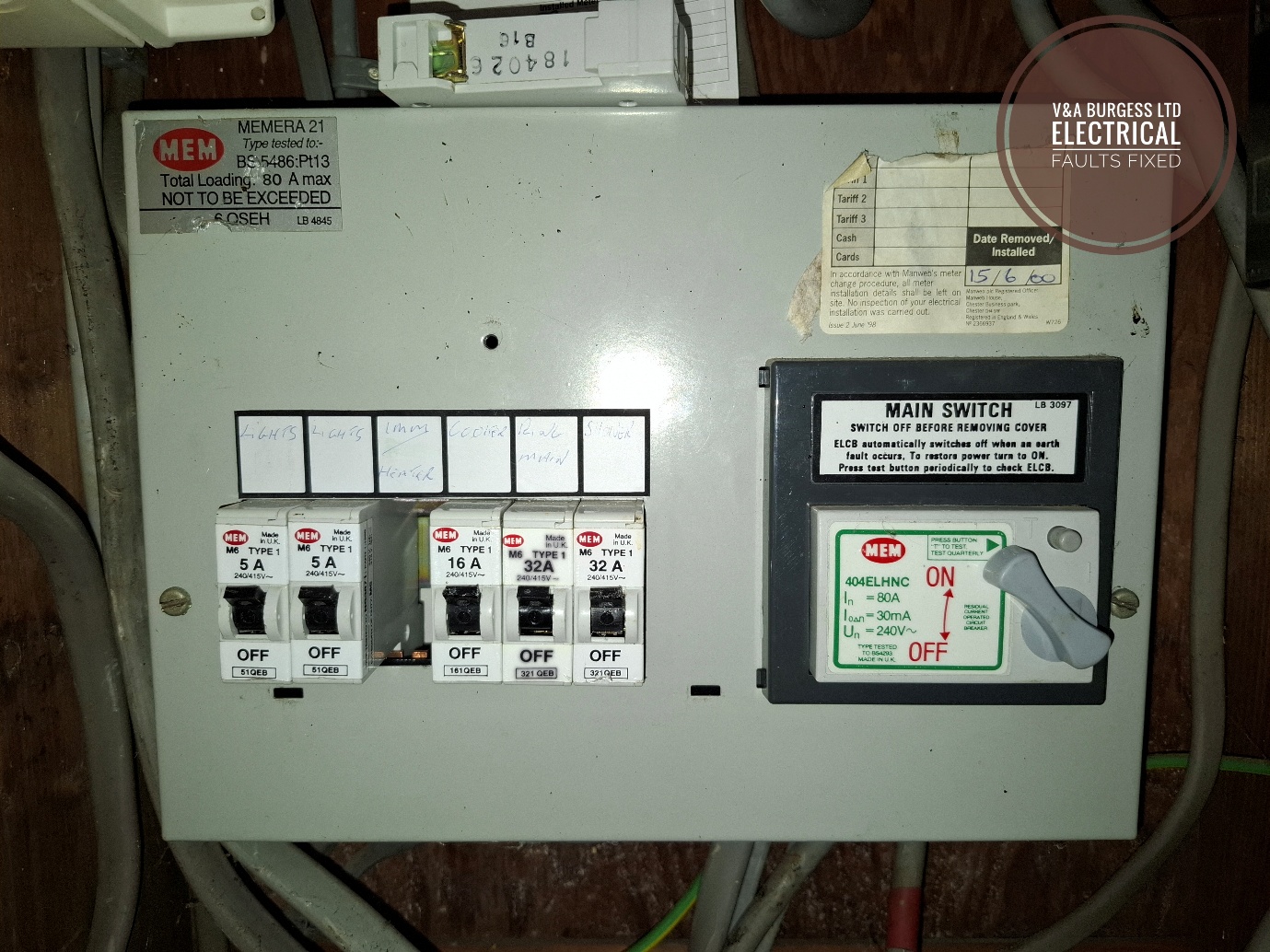
(Photo: Old Style Fusebox with uprfont RCD)
Back to top2) Risk of Fire in the Fusebox
Should regular inspections not be carried out by a suitable qualified professional electrician, there is a risk of early warning signs being missed. Loose connections, damaged and outdated equipment, poor installation and more can lead to an electrical fire occurring in the fuse box or throughout the electrical installation. An old fuse box is particularly at risk as the equipment is now very old inside these boxes and as a result, corrosion, internal damage, and loose connections could be present.
Back to top3) Outdated Consumer Units
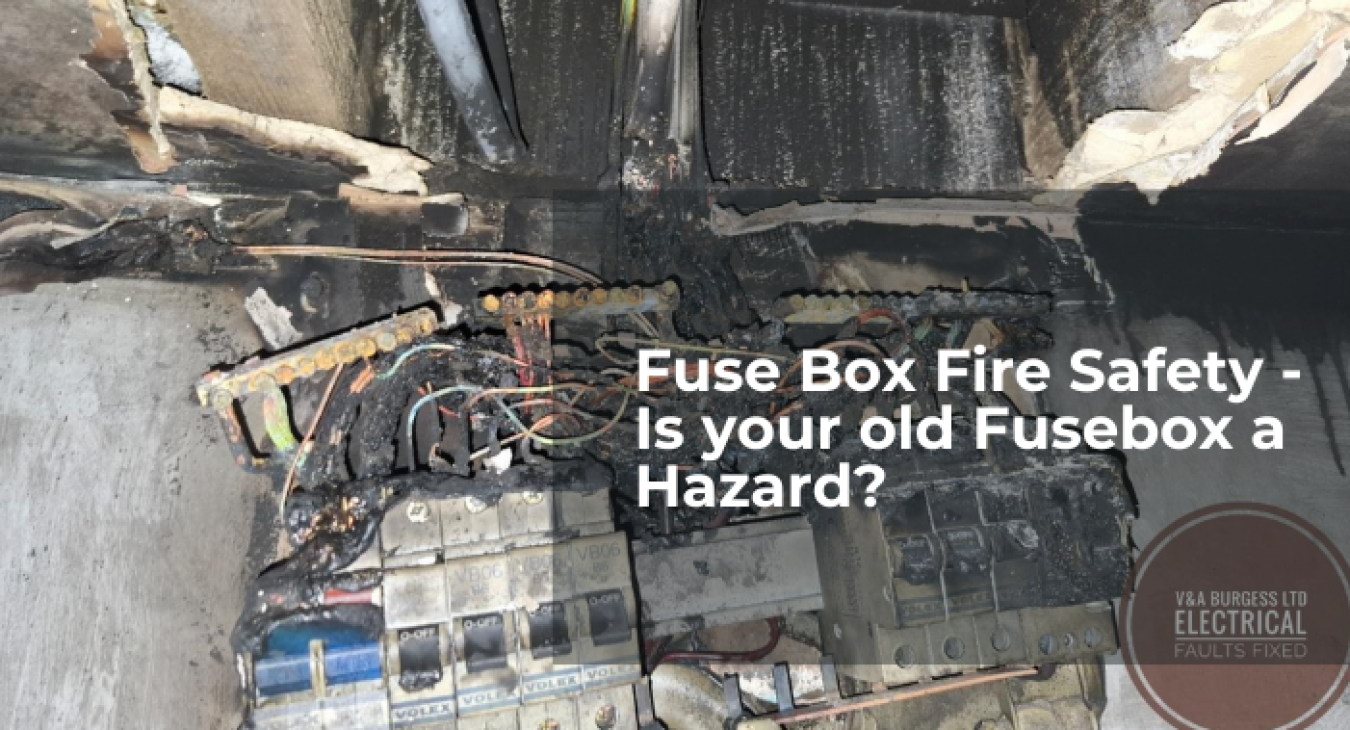
You may have a more modern style fuse box called a consumer unit. These units have trip switches rather than fuses but some of these units are now becoming a risk also. The main picture on this article was a consumer unit that was approximately 25 years old but had not been checked since installation. As a result, a house fire broke out resulting in attendance from the fire brigade and extensive costly repairs to the electrical system and decor in the property.
If you don't know the age of your fuse box or consumer unit and have concerns then please get in touch with me on WhatsApp or using the contact form. Alternatively consult a local qualified electrician to assess any works required.
Back to top4) Danger Signs for your Fuse Box

(Photo: Very old Fuse Wire Style Fuse Box)
There are a number of warning signs that you should check for when assessing the risk, a fuse box poses to your safety:
- Fuses and Fuse wire
- Plastic Consumer Units
- Overheating
- Browning / Colour changing
- Damaged Cover
5) Fuses and Fuse Wire Fuse Boxes
These units are now very old and should really be replaced. If you have one of these units in your property then it’s time to consult a qualified electrician to carry out a safety electrical check / EICR to assess what work needs to be done to bring the installation up to the modern safety standards.
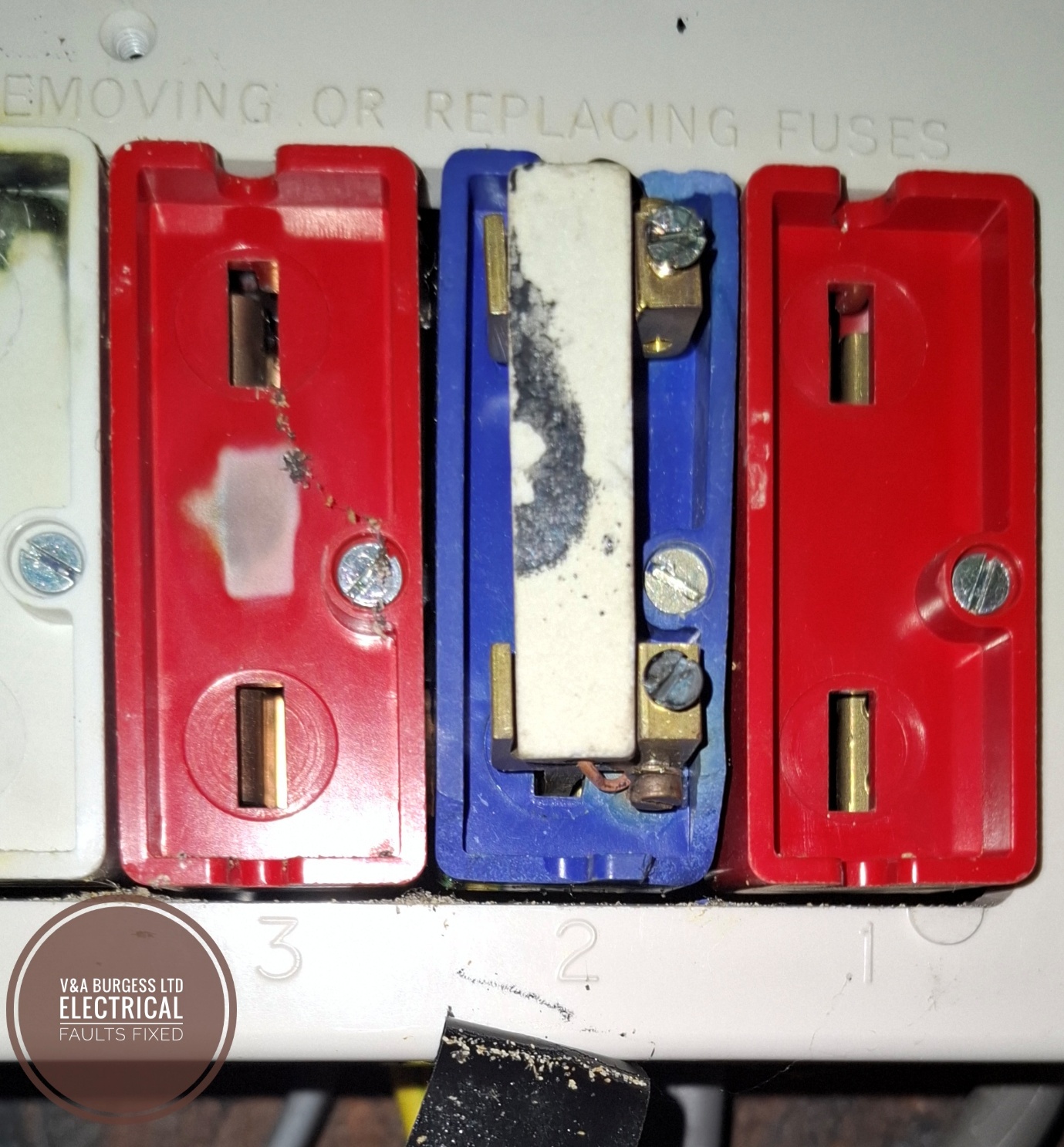
(Photo: Old and Dangerously Damaged Fuse Box)
Back to top6) Plastic Consumer Units
Plastic consumer units are not generally a danger unless there are signs of thermal damage to them. If there are signs of melting, cracks, or any other suspicious signs then this needs to be checked out by a qualified electrician as soon as possible.
Back to top7) Overheating
If you find that your trip switches or fuses are getting quite warm during normal operation then this could indicate that there is a serious problems beneath the surface. Overloading of electrical circuits by using too many appliances or power hungry equipment is a real fire risk. If you have any issues with overheating then get in touch with an electrician ASAP.
Back to top8) Browning / Colour Changing
Where plastic consumer units change from white / beige to brown or begin to look melted this is a strong sign that there is or has been some form of overheating or fire inside the unit. If you spot these signs then you should turn off all the electrical supply at the main switch and call an emergency electrician immediately!
Back to top9) Damaged or Missing Cover
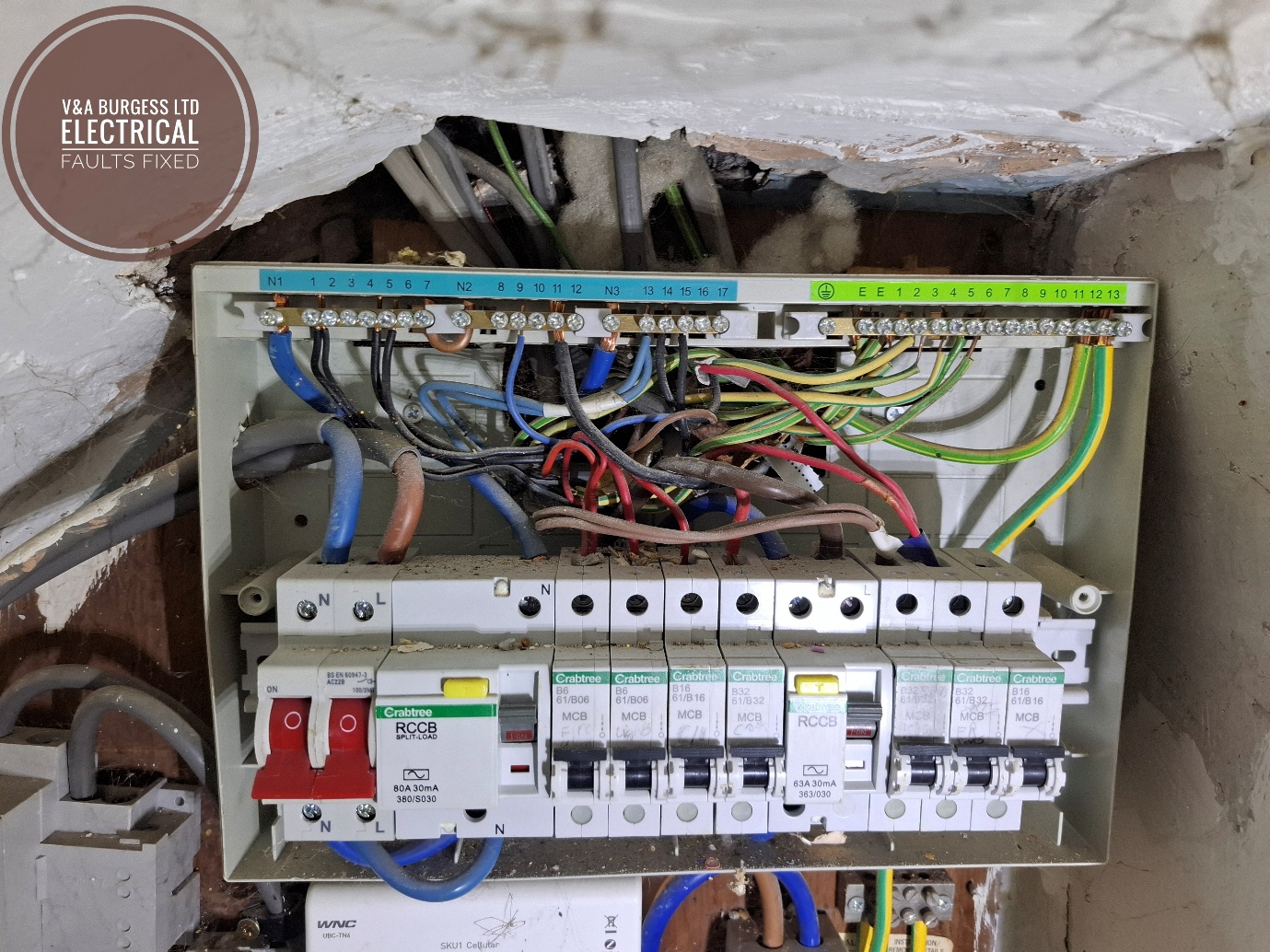
(Photo: Dangerous Consumer Unit with Missing Cover)
Where a fuse box or consumer unit cover becomes damaged or loose, there is a risk that access to live parts will occur should a further knock damage the unit more. Any damage to the cover or rest of the consumer unit should be checked out asap. An electrician can do this for you and if you cannot find one then feel free to get in touch with me and I may be able to assist over video call.
Back to top10) New Regulations
In the UK our wiring regulations are regularly reviewed, adapted, and changed to allow for the ever changing world of technology, electrical installation, and new equipment. As our electrical equipment becomes more complex, more power hungry or the demands on electrical systems increase our regulations have to change to ensure that our installations are still safe.
When a replacement fuse box or consumer unit is installed, this should be carried out to the latest version of our wiring regulations to ensure that electrical safety standards are met.
Back to top11) Emergency Electricians
When you have a serious overheating fuse box, damaged fuse box or suspect an impending fuse box fire then you must contact an emergency electrician immediately. If there is smoke or flames from your consumer unit then get out of your property immediately and call the fire service to attend. Emergency electricians can repair the worst of any damage to electrical systems, fuse boxes and other electrical equipment but are not qualified to deal with home fires. Calling 999 in the UK will put you through to the emergency service.
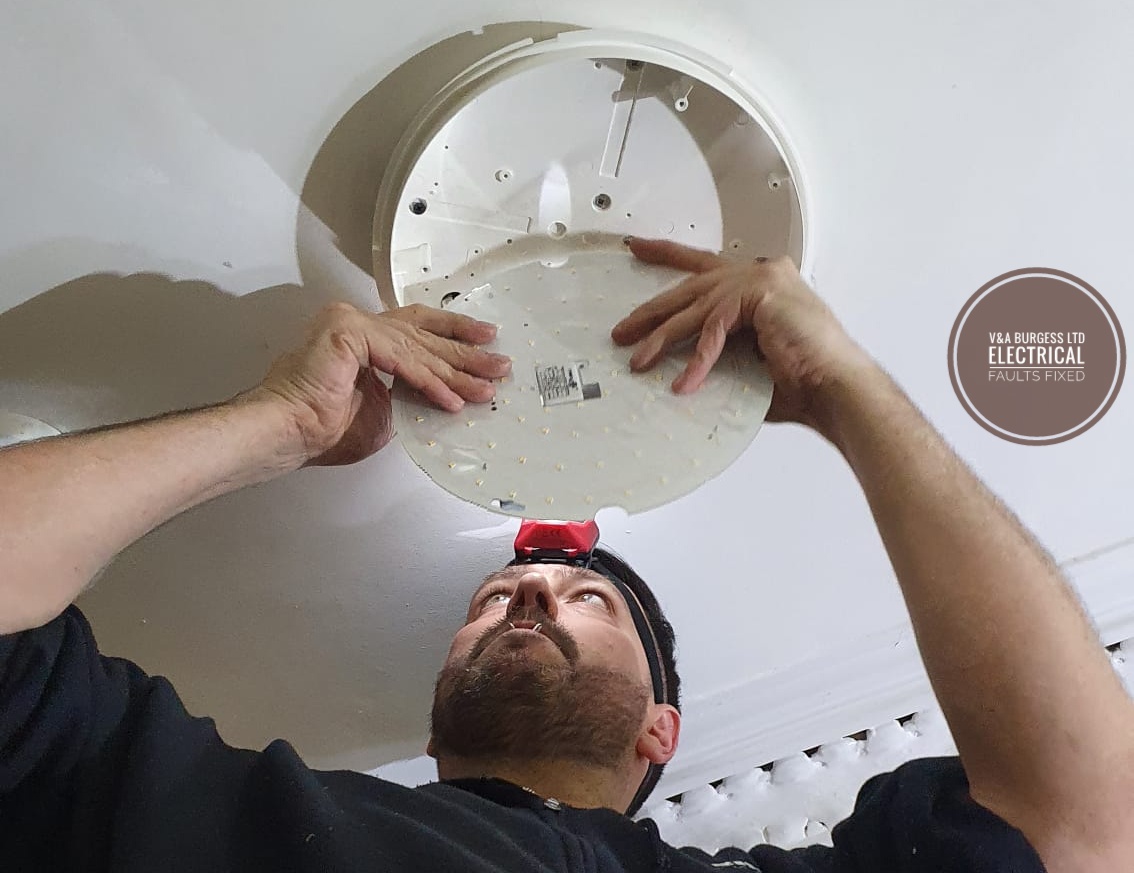
(Photo: Electrician fitting a light)
Back to top12) Legal Requirement
There is no current legal requirement for private householders to have their electrical installations checked on a regular basis, as crazy as that sounds! When we replace a consumer unit or fuse box, the works must be notified to Building Control (in England and Wales) under Part P of the building regulations. An electrical installation certificate must also accompany the works to show that adequate testing and inspection has been carried out.
Back to top13) Residual Current Devices in your Fuse Box
Modern consumer units often come with RCD (Residual Current Devices). These devices help to prevent serious electrical shock and can offer some protection for the wiring helping to reduce the risk of electrical fires. Modern RCDs should be of the correct type and rating for the load and installation. Your electrician should be able to select the correct RCD protection for your consumer unit. The more modern the consumer unit the better protection it will offer against a variety of dangers.
Back to top14) USA Breaker Panels
Much of what is written above will also apply to North America. Instead of RCD devices you will find GFCI circuit breakers in your panel. These devices are known as Ground Fault Circuit Interrupters and they work much in the same way as RCD devices in Europe and the UK. Every home should have GFCI protection to help reduce and prevent electrical shocks.
Breaker panels should be inspected regularly by a qualified electrician to ensure that there are no immediate or potential dangers and to help prevent serious hazards from appearing in your wiring system. If you suspect you need a modern circuit breaker panel then consult an electrician to get some local knowledge and advice as regulations may vary between states.
Back to top15) Circuit Overloads
Where the risk of circuit overloads is present, you should consider asking your electrician to install additional circuits to help spread the load across your wiring system. New appliances and some older models should have a data badge present on them showing their total power consumption in Watts, possibly the Amperage in Amps and other information.
Using the information on these data badges, you can calculate the total load on the circuit (obviously not all appliances will be used at the same time). Compare the calculation with the rating of your circuit breaker and see what the total demand is VS what the circuit will safely carry. There are allowances made for kitchen circuits / socket outlet circuits sometimes which allows electricians to anticipate total demand VS what the circuit will demand in real life operation.
Back to top16) Older Homes and Electrical Circuits
In older homes, there are often fewer circuits installed. This represents an era where we did not use much electrical equipment in our homes. In today’s homes we should have many more electrical circuits installed for various reasons:
- More convenience during electrical faults, less power is tripped off
- Spreading the load across the electrical system and reducing wear on any one circuit
- Convenience when working on a circuit to minimise disruption
- Separate cooking appliances from socket outlets
- Ensure heavy hungry equipment like electric showers and car chargers have their own circuit
Older homes with outdated wiring and old fuse boards are likely to be hiding several issues such as faulty wiring, reversed polarity, Neutral to Earth (or Neutral to Ground) faults and more. Older units are unable to have the facility to monitor the cable insulation quality like newer units can manage.
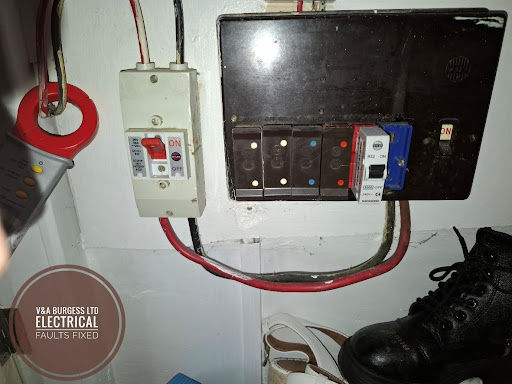
(Photo: An Old Outdated Fuse Wire Fuse Box)
Back to top17) Conclusion
Regardless of the age of your fuse box, consumer unit, or breaker panel, it is always recommended to have regular electrical inspections carried out by a professional, qualified electrician. Without regular safety electrical checks, you are putting your home and the occupants at risk. Routine inspections present an opportunity to detect problems early and may also keep home insurance companies happy that maintenance
Back to top